Key Takeaways
- Food and beverage inventory requires end-to-end visibility. Inventory moves constantly between warehouses and delivery trucks, making real-time tracking across all locations essential for accuracy.
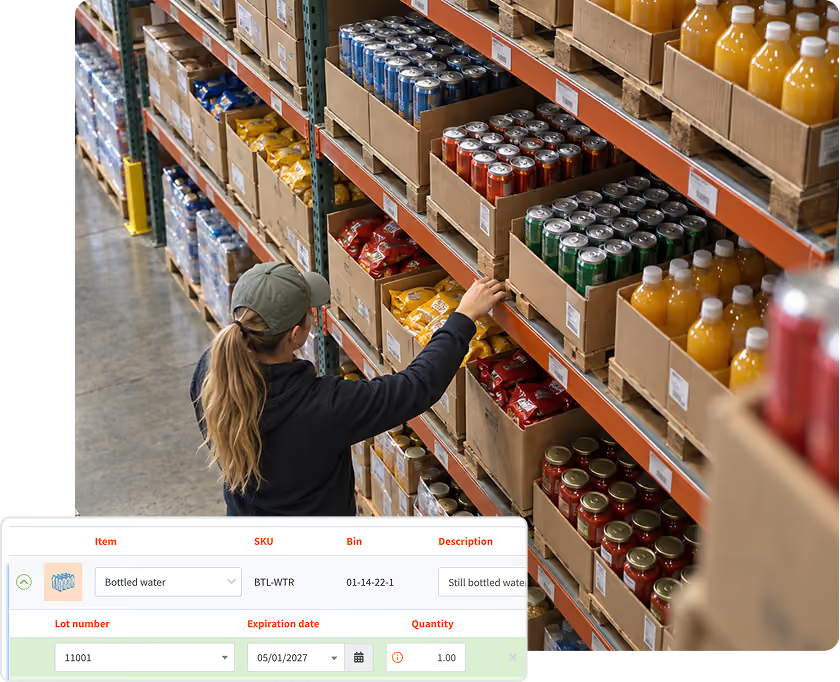
- Lot traceability protects against costly recalls. Batch tracking allows distributors to identify exactly which products were delivered, where they went, and which customers received them.
- Expiration tracking ensures product freshness and reduces waste. Systems using FEFO (First Expired, First Out) prioritize older stock, helping prevent spoilage across both warehouse and delivery routes.
- Barcode scanning improves accuracy across warehouse and field operations. Scanning during receiving, picking, loading, and delivery verifies the correct products and batches, reducing costly fulfillment errors.
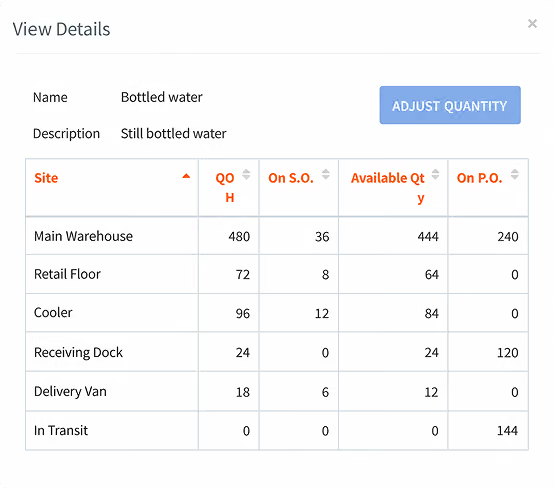
- Mobile and multi-location inventory systems connect warehouse and delivery workflows. Real-time updates across warehouses, trucks, and accounting systems ensure consistent stock levels, better planning, and faster operations.
.jpg)
Food and beverage inventory software is built for a reality most distributors know well: inventory doesn’t sit in one place—it moves constantly between warehouses and delivery trucks. Products are received, stored, picked, and loaded onto vehicles, then sold or delivered throughout the day. By the time a truck returns, that inventory has already changed hands multiple times.
That constant movement makes inventory control significantly more complex than in most industries. Distributors need to track not just quantities, but also which batch was loaded onto which truck, which products are approaching expiration, and what remains unsold at the end of each route.
Nearly half of food and beverage suppliers still rely on spreadsheets for daily operations, even as inventory moves across warehouses and delivery routes in real time.
In this article, we’ll break down how inventory software systems built for distribution workflows connect warehouse operations with delivery in the field—from receiving and storage to truck loading, route sales, and returns. You’ll see how the right system helps maintain batch traceability, control expiration risk, and keep inventory accurate across both warehouse and delivery environments.
Connecting Warehouse Operations and Delivery Routes
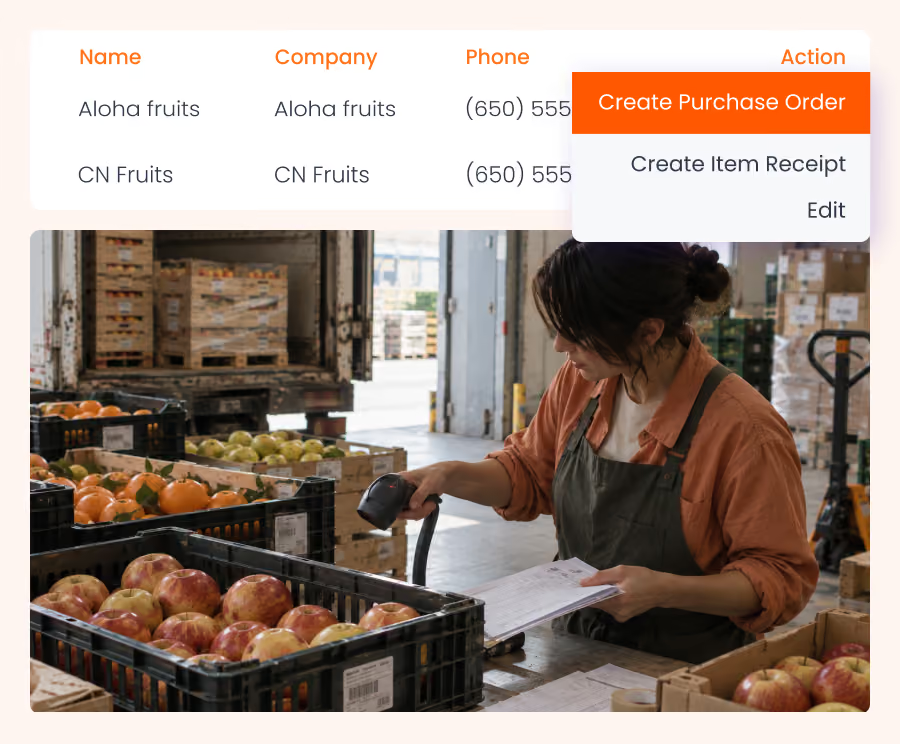
One of the most important capabilities of food and beverage inventory management software is its ability to connect warehouse operations with route distribution.
A typical distributor workflow looks like this:
- Inventory is received from suppliers and logged into the system.
- Products are stored in the warehouse with batch and expiration information.
- Orders are picked and prepared for delivery routes.
- Inventory is loaded onto delivery trucks.
- Drivers sell or deliver products to customers throughout the day.
- Remaining inventory is reconciled when trucks return.
Without a centralized inventory system, each step may rely on separate records or manual updates. This fragmentation makes it difficult to maintain accurate stock levels.
With dedicated inventory software, each movement, from warehouse receiving to route delivery, is recorded automatically. This creates continuous visibility into product quantities and locations.
Traceability and Recall Protection
Food distributors must always be prepared to respond quickly to quality issues or recalls.
Consider a beverage distributor that receives several batches of fruit concentrate from different suppliers. Weeks later, the supplier notifies distributors that one batch may be contaminated.
If the distributor cannot trace which shipments contained that batch, they may need to recall every shipment of that product. This is expensive, disruptive, and damaging to customer relationships.
With proper lot tracking, the distributor can immediately identify:
- Which warehouse locations received the batch
- Which trucks delivered it
- Which customers purchased the product
Food and beverage inventory apps maintain this level of traceability automatically. Each lot number remains associated with every transaction throughout the supply chain.
Explore the 10 Ways Food and Beverage SMBs Use HandiFox Online.
Managing Expiration Across Warehouse and Trucks
Expiration tracking becomes even more complicated when products leave the warehouse and travel on delivery routes.
For example, a dairy distributor may load trucks each morning with yogurt, milk, and other short-shelf-life products. Drivers deliver these items to multiple stores before returning to the warehouse.
Without proper expiration tracking, older products may remain on trucks while newer stock is shipped from the warehouse.
Advanced food and beverage tracking software helps prevent this by:
- Tracking expiration dates at the lot level
- Prioritizing older inventory during picking (known as the FEFO fulfillment method - first expired, first out)
- Monitoring stock across both warehouses and route vehicles
This ensures that products nearing expiration are distributed first.
Discover How to Track Lots and Expiration Dates with HandiFox Online.
Barcode Scanning for Warehouse and Route Accuracy
Barcode scanning has become a standard tool for improving inventory accuracy.
Instead of relying on manual entry, warehouse staff scan products during:
- Receiving shipments
- Picking orders
- Loading trucks
- Counting inventory
Scanning verifies that the correct product and batch are being processed.This dramatically reduces the risk of shipping the wrong product or mixing batches during fulfillment.
When paired with food and beverage inventory software, barcode systems also accelerate warehouse workflows and eliminate many manual data-entry errors.
To extend barcode workflows to your delivery fleet, consider what hardware best supports your day-to-day operations. Depending on your process, you may need an additional layer of order verification or the ability to print documents on the go.
If you’re evaluating hardware options, check out our Beginner’s Guide to Barcoding to help inform your purchasing decisions.
Real-Time Inventory Visibility Across Locations
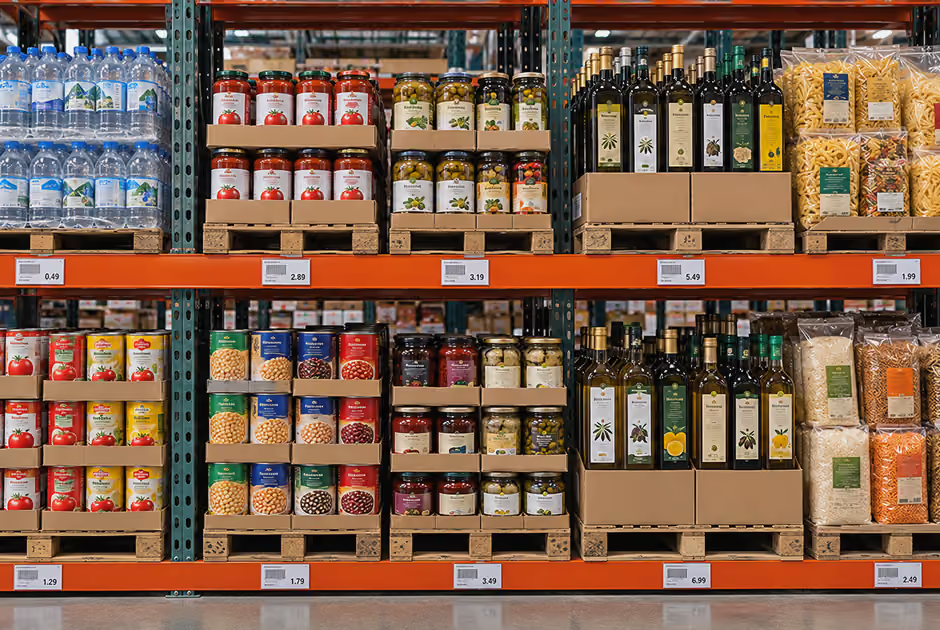
Distributors often store products in multiple environments, including:
- Central warehouses
- Refrigerated storage
- Regional distribution facilities
- Delivery trucks
Without real-time visibility across these locations, stock levels quickly become unreliable.
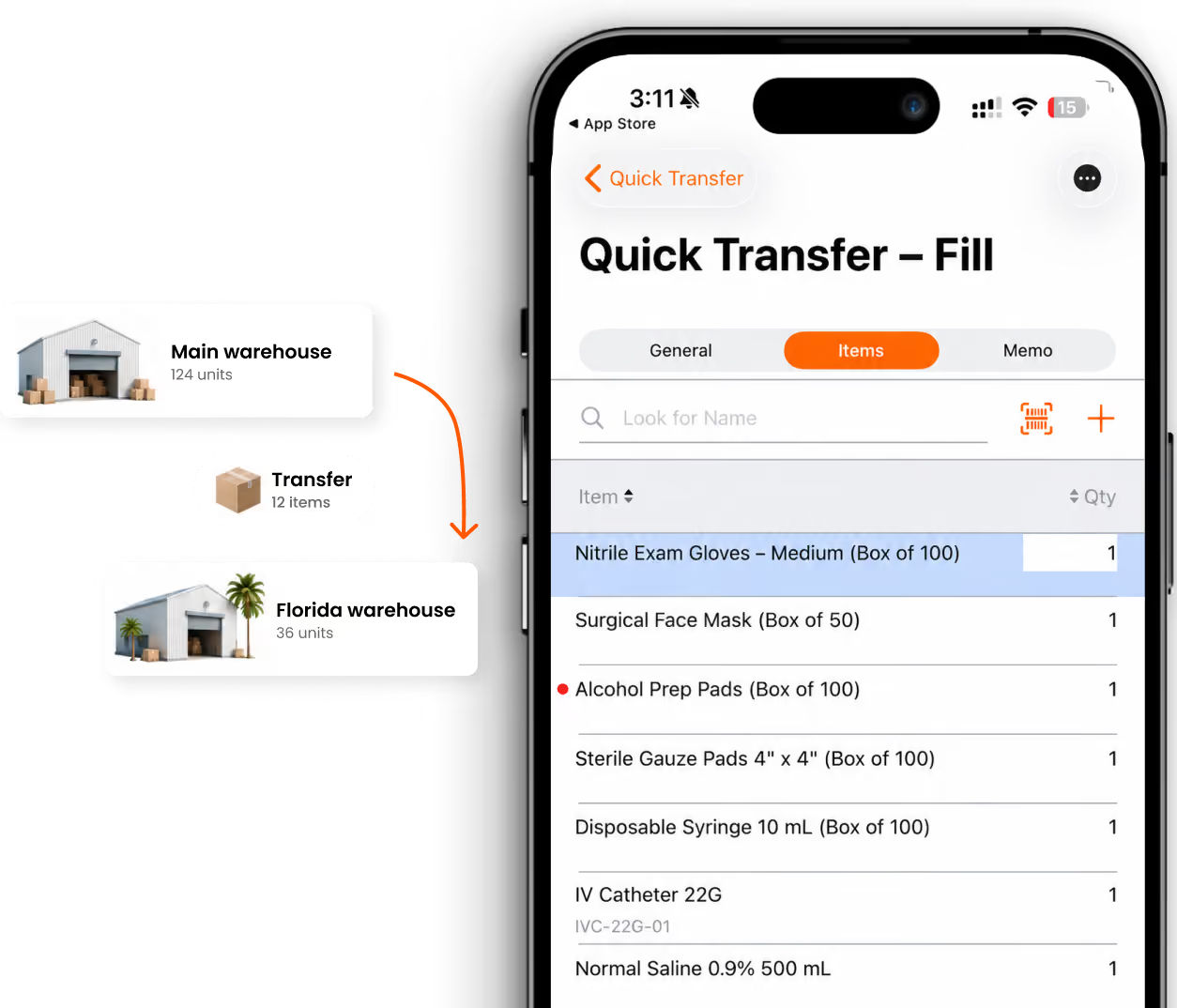
Food and beverage inventory tracking software allows businesses to track inventory across all locations simultaneously. Warehouse managers can see exactly how much inventory is available, what is currently loaded on trucks, and what remains in storage.
This visibility improves both purchasing decisions and delivery planning.
Managing Multiple Units of Measure Across Warehouse and Delivery
Food and beverage distributors rarely handle products in a single unit. Items are typically purchased in cases, stored in bulk, and sold as individual units or partial quantities during delivery routes. Without proper unit conversion, inventory quickly becomes inconsistent as products move between the warehouse and trucks.
Explore Why Tracking and Managing Multiple Units of Measure is a Game-Changer.
This becomes especially problematic when drivers load full cases and return with partial quantities. If those differences aren’t accurately reflected, stock levels drift, leading to picking errors, incorrect availability, and reporting issues.
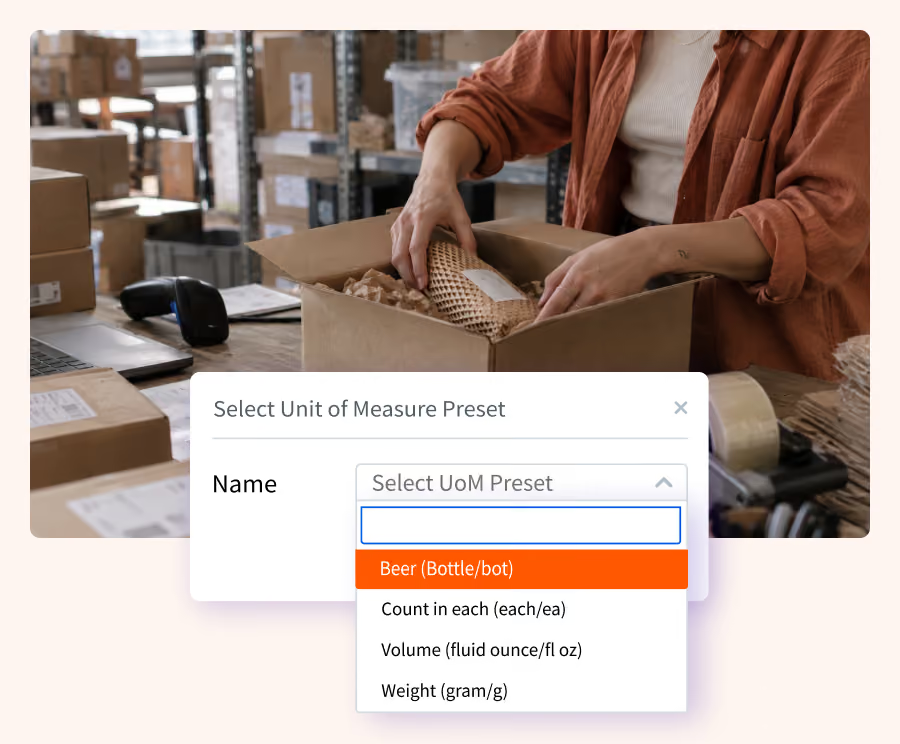
Food and beverage inventory software solves this by supporting multiple units of measure within a single item. By defining relationships (e.g., 1 case = 24 units), the system automatically converts quantities during receiving, picking, sales, and returns—keeping inventory accurate across both warehouse and delivery operations.
How HandiFox Supports Food and Beverage Distribution
HandiFox provides features that help distributors maintain accurate inventory from warehouse receiving through route delivery. These capabilities include:
- Lot and expiration tracking to maintain product traceability
- Barcode scanning for warehouse and delivery accuracy
- Mobile inventory management for route operations
- Multi-location inventory tracking across warehouses and vehicles
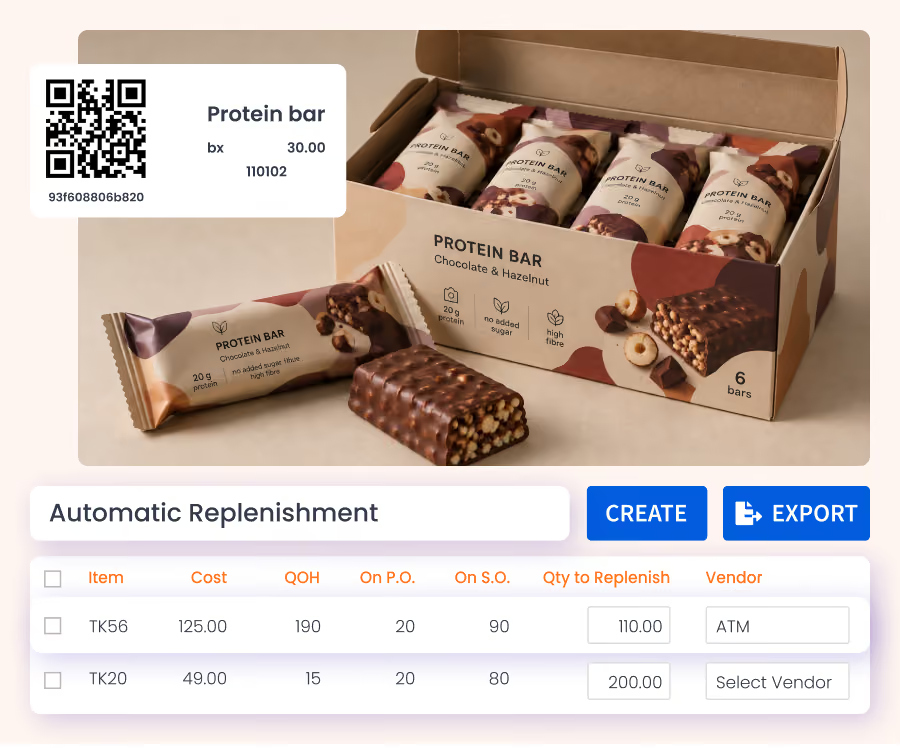
- Automated replenishment and purchase order management to prevent stockouts and overstocking by aligning purchasing with actual demand
- 3-step (Pick-Pack-Deliver) order fulfillment to add layered verification, improving shipping accuracy and reducing costly mistakes
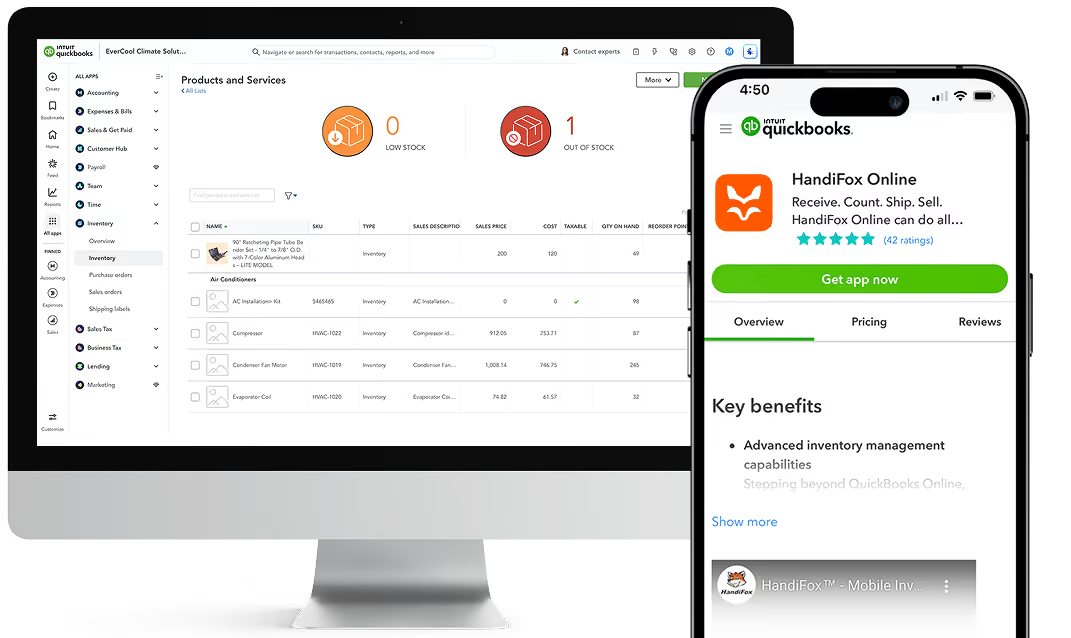
- QuickBooks integration for real-time accounting synchronization
Because warehouse activity and financial records remain connected, distributors can maintain accurate inventory and accounting data without duplicate entry.
What This Looks Like in a Real Distribution Workflow (Tevan Enterprises)
Tevan Enterprises, a Canada-based wholesale candy distributor, runs a hybrid operation where the warehouse and delivery trucks both act as points of sale. Their delivery vehicle functions as a “rolling candy store,” allowing them to sell directly on the route.
Before implementing HandiFox, their workflow relied heavily on paper—orders were written manually, calculated by hand, and later re-entered into QuickBooks. The warehouse and office operated separately, with no real-time visibility into what was sold, picked, or delivered throughout the day.
After moving to a unified inventory system, those gaps were eliminated. Warehouse, delivery, and accounting workflows are now synchronized in real time. Orders created in the field are processed instantly, barcode scanning ensures accurate picking, and inventory updates automatically across locations.
.jpg)
The result is a faster, more accurate operation with less manual work, allowing the business to handle more transactions without increasing workload.
Conclusion
Food and beverage distribution requires careful coordination between warehouse operations and delivery routes. Perishable products, batch traceability, and expiration tracking create inventory challenges that generic inventory systems struggle to handle.
Dedicated food and beverage inventory software helps distributors maintain accurate stock records while protecting product freshness and traceability. By connecting warehouse activity with delivery routes and accounting systems, modern inventory platforms provide the visibility required to manage perishable inventory efficiently.
For distributors seeking reliable food and beverage inventory control software, systems like HandiFox offer the tools needed to track batches, monitor expiration dates, and maintain real-time inventory visibility from warehouse to delivery truck.